|
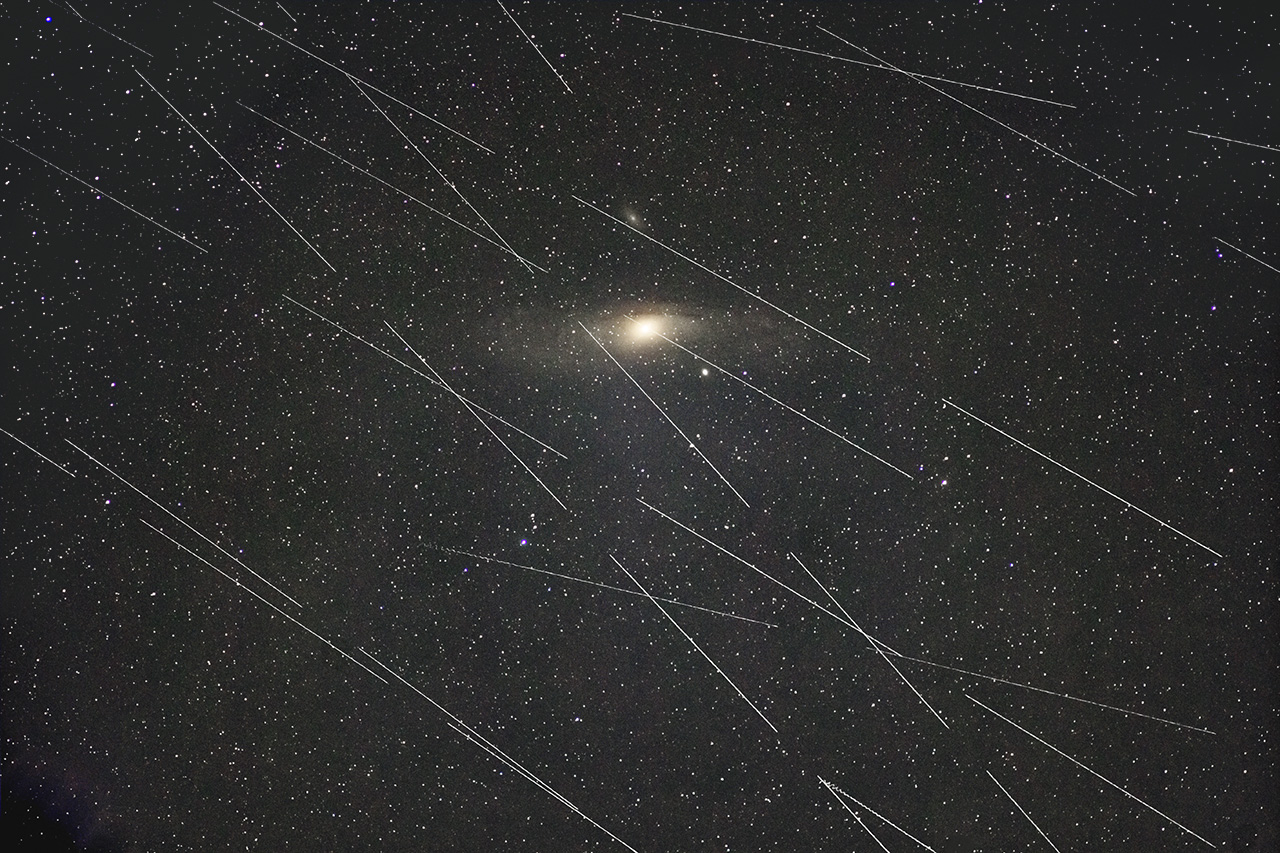
Satellites, satellites, and PANSTARRS redux
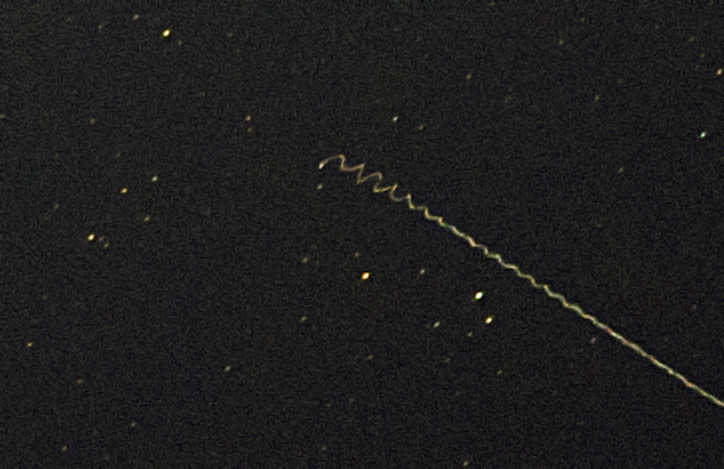
This is what happens if you press the shutter button manually to begin a series of exposures on a less-than-rock-solid mount. Don't do that. Or toss frame one, or use a hat trick, or a remote release. (You'll find this satellite trail just right of center at the bottom of the frame above.)
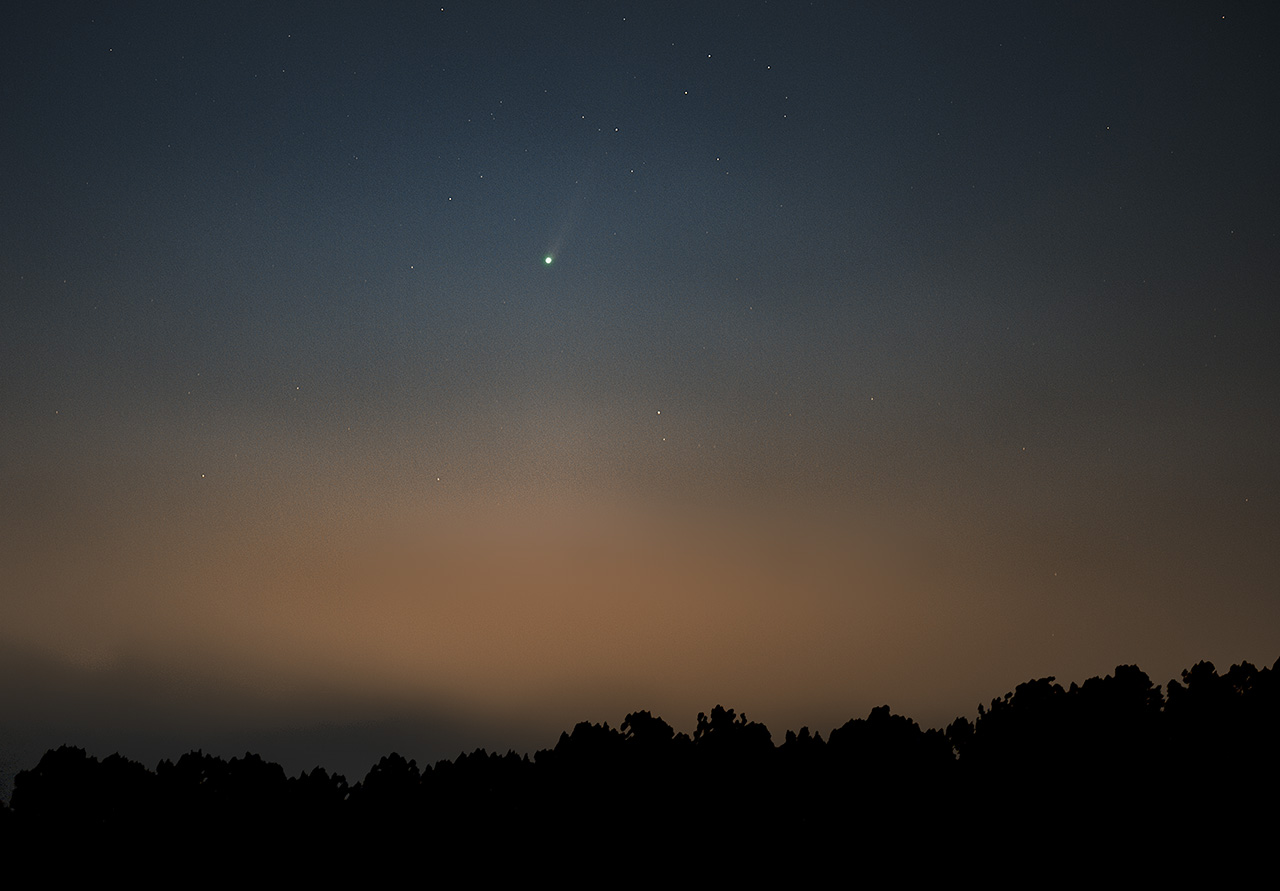
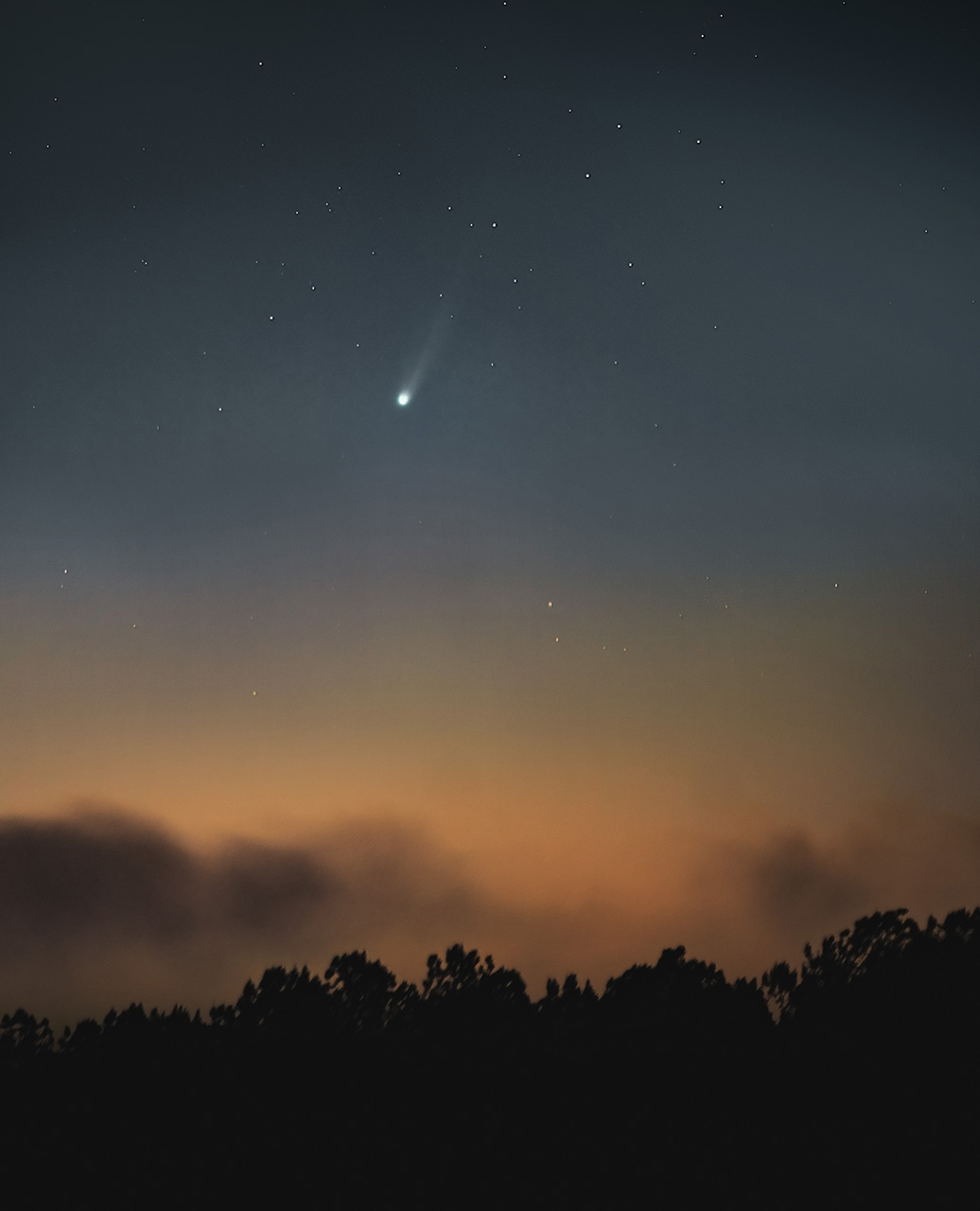
Guide 9 told me when the comet would rise, but it emerged from the fog in its own good time. By the time it did, the morning sky had brightened enough to hide all but about a degree of the comet's tail. The comet now begins to swing between the Earth and the Sun. What happens in the evening sky in a couple of weeks is anybody's guess. The show will be low in the western sky and well to the south. In the meantime, here are two last looks in the morning sky.
Worth nothing that even in the twilight, those stacks reach down to 10th magnitude and would, I am sure, go deeper if the object were to bring up fainter stars.
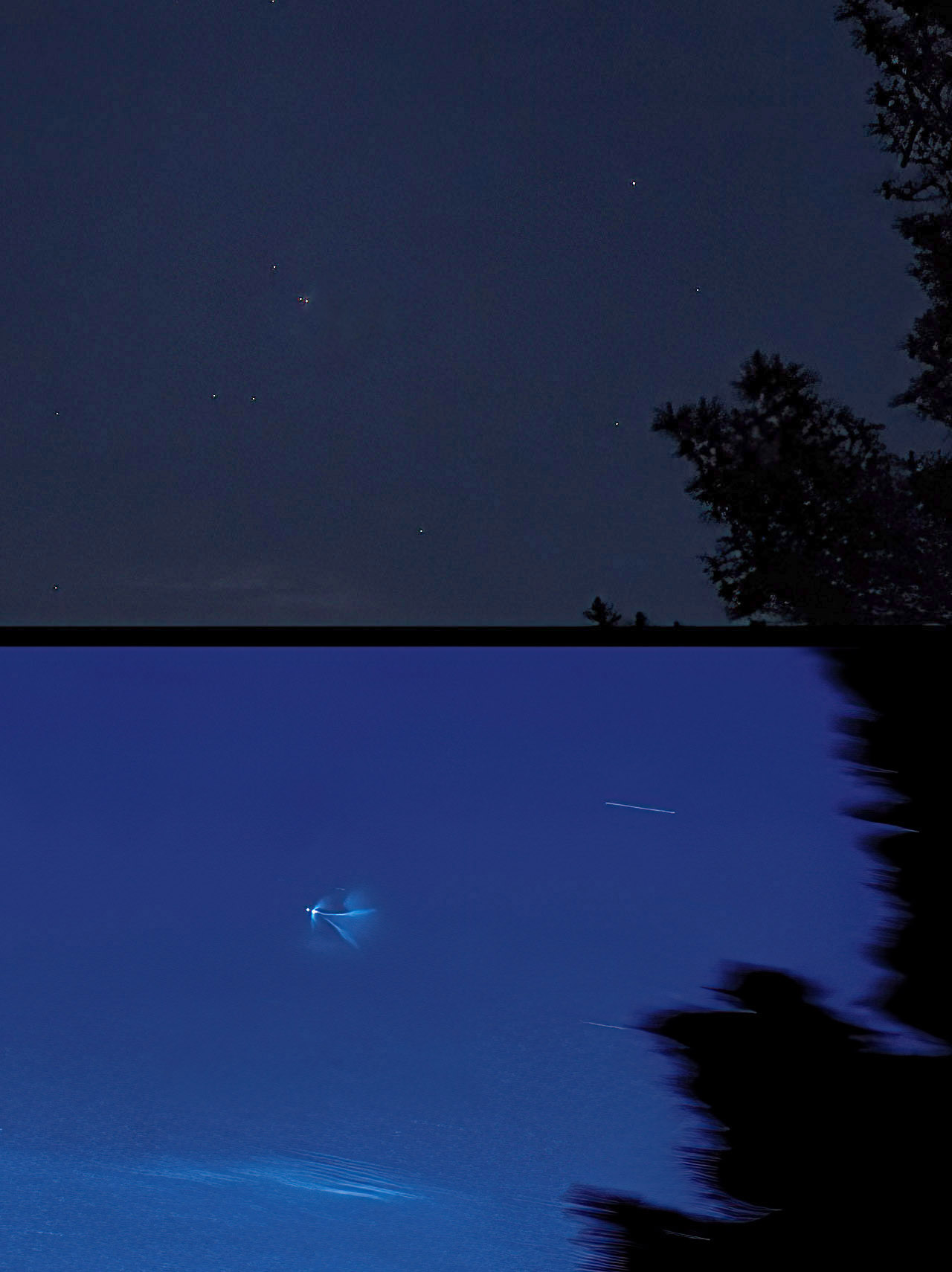
04/27/2026. ULA sent an Atlas V up the east coast in evening twilight. Here's a composite showing that what the eye saw and what the camera "saw" were very different. The upper frame is a fair approximation of the visual aspect. Amy spotted the two moving dots, which I would not have recognized owing to their scant resemblance to the Falcon 9 launches I have seen under similar lighting. This is about 30 seconds after staging. The Centaur's exhaust interacts with the Atlas as it vents. Make it big:
1/50s F1.4 ISO 12800, R6, 105mm Sigma slightly cropped. The bottom frame is a stack of 33 frames captured within a couple of seconds. The bright star is Spica. The Centaur upper stage and the Atlas booster faded slowly and gradually separated for the next several minutes. After ventng from the booster ended, I could still pull the Centaur's plume out of image stacks. Interesting sight but not much to show. Let's save the bandwidth.
:: top :: |
|
© 2026, David Cortner