Two Galaxies, two Meteors, and
a Disintegrating Comet
2025/11/28. I've collected 700+ images of M31 over the last few nights and am finally determined to systematize how I'm handling them. Here's the current workflow:
Debayer. Start with the CR3 files and debayer as usual in PI (Auto/VNG/combined RGB output color).
Calibrate. Today's darks are just ten or so averaged, no normalization, no exclusion. The flat is an adventure. It's a blue sky flat made through the doube acrylic defuser, debayered, averaged, format converted back to RGB, and desaturated using the PI "curves transform". Then it's tweaked against a subset of live data to produce a decent result with neutral -- not too bright, not too dark -- corners. In this case, I applied a convolution filter twice (PSF around 600) to remove dust shadows (which are inconsistent between sessions) preserving only corrections for the center hot spot and edge falloff in the 400mm lens. Then I adjusted the curves (a linear transfer, raising the black point to ~30 and lowering the white point to ~225) to prevent over- and under-correction. Just mess with it, and eventually figure out what's going on.
Align. Remember to turn drizzle data off, otherwise just take defaults and go. Relax the detection and tolerance threshholds for significantly unfocused images. Align in batches if memory issues appear (I could not align 357 M33 images for example, but batches of 150 and 207 were no problem -- when aligning in batches, just be sure to keep the same alignment image).
Integrate. Winsorized Sigma Clipping, Scale + zero offset, no signal and noise evaluation. -4 Sigma, +3 Sigma, Winsorization cutoff 5.000 (whatever that one is).
And then things got interesting... the middle 30% of so of the data had been acquired with the camera rotated about 40 degrees. Eventually, I rotated the minority exposures to approximate the majority and aligned and stacked them as usual. I still had to crop pretty severely and do some local cosmetic adjustments, but it all worked. I really need to put a scale on the lens so I can set, note, return to specific camera angles.
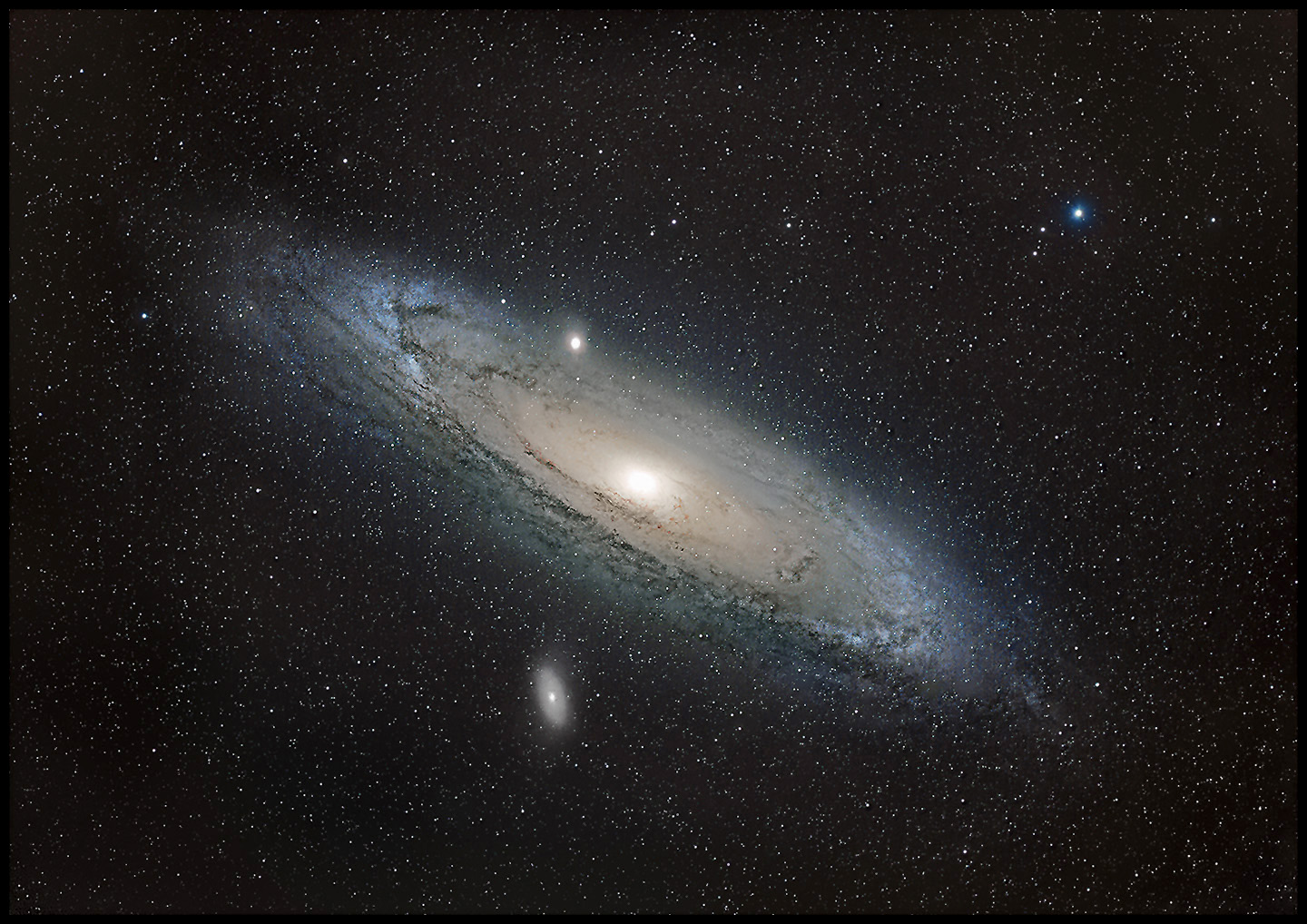
703x30s, 400mm F2.8 Nikkor
Canon R6, ISO 1600 (mostly, a few 3200)
2025/12/14. The night after the peak, 3200 Phaethon tossed a couple of Geminid crumbs my way. I only caught three in hundreds of frames on a very cold night. Here are two that arrived a couple of minutes apart.
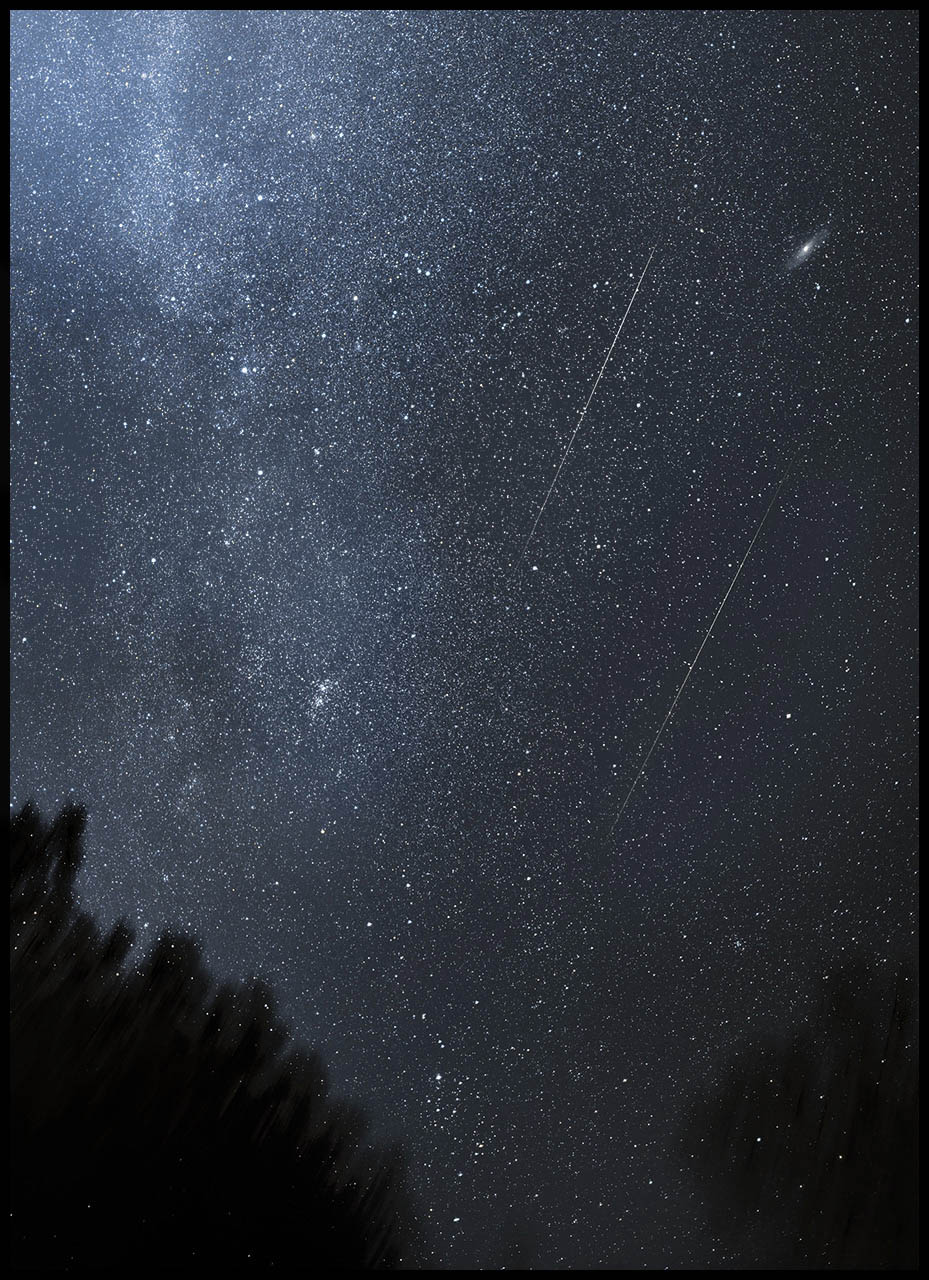
Canon R6, ISO 800, 25mm Zeiss Distagon at F2.0
SWSA.
5x30s.
2025/12/16. The outer whorls of M33 turn up in three hours of exposure on a not-entirely-transparent (but-pretty-damn-crisp) winter night. Could it use another few hours? Well, sure, I mean what couldn't? Still and all:
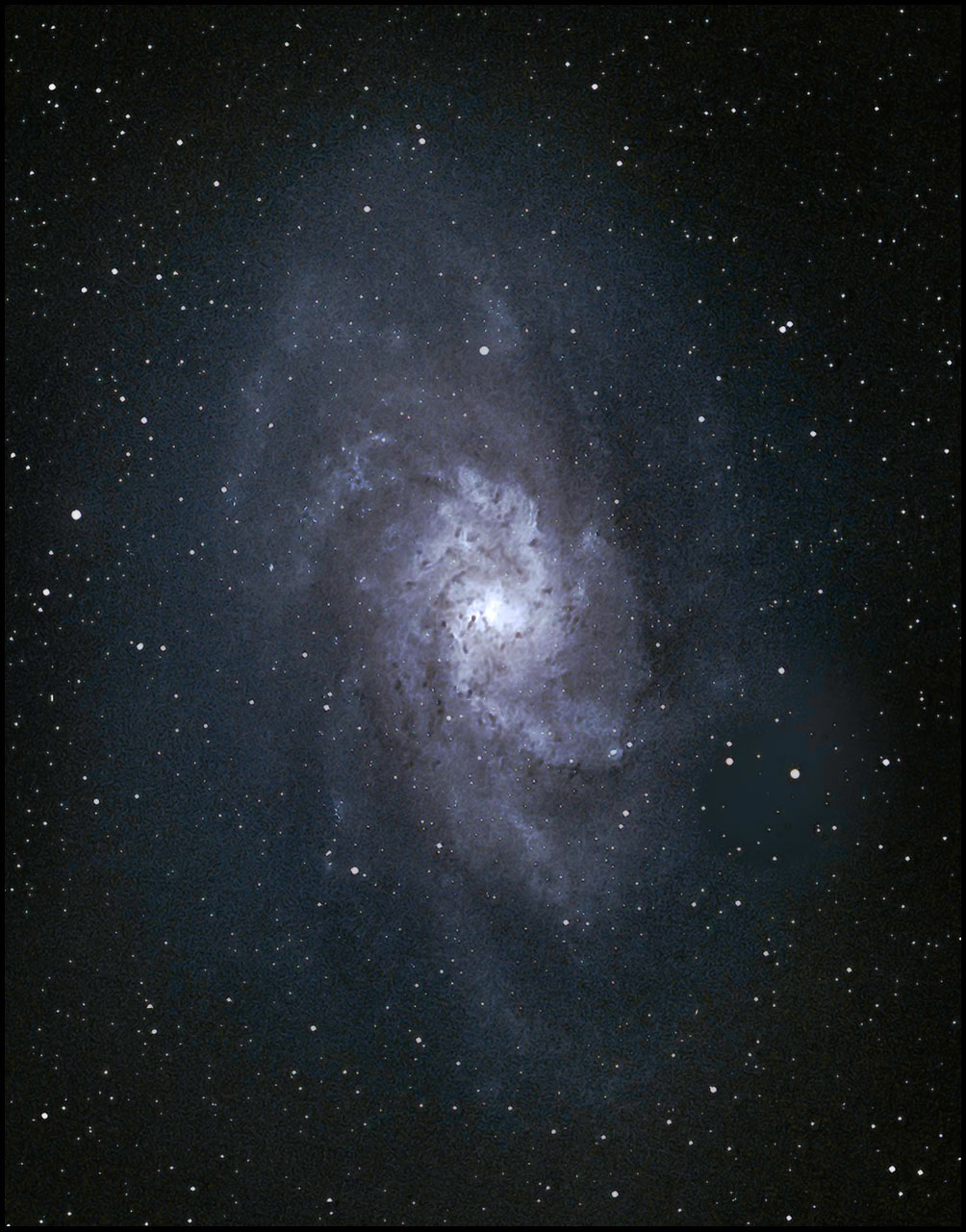
357x30s, 400mm F2.8 Nikkor, Canon R6, ISO 1600, pretty tight crop.
PixInsight to stretch starless image, Photoshop to remix stars.
Click to see it against a black background.
Edited to add, 12/20: focus matters! I collected another 2.5 hours on this tonight with better focus. I'll save us both the bandwidth until I can add another few nights' data and show it off as one big pile. See below!.
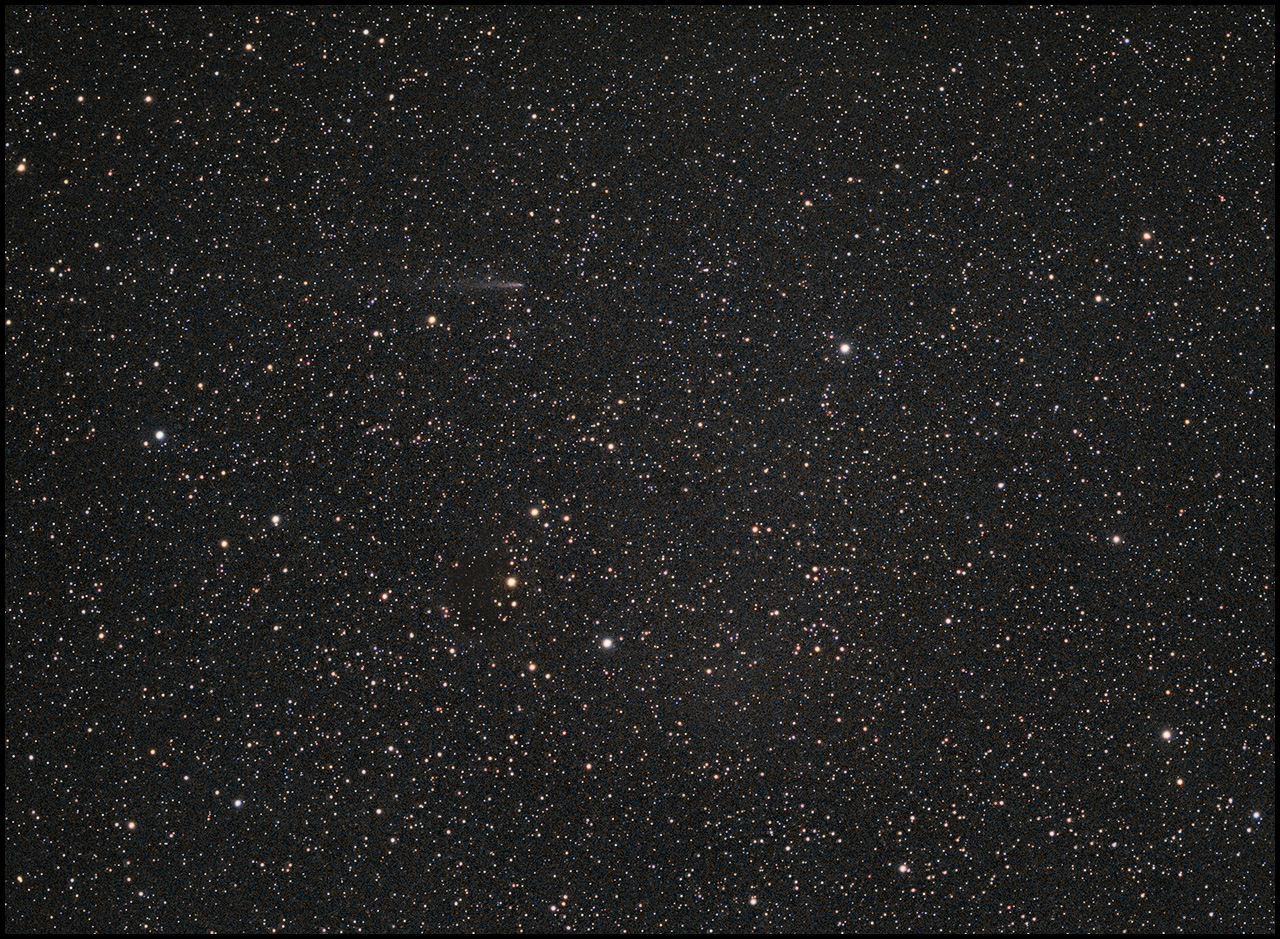
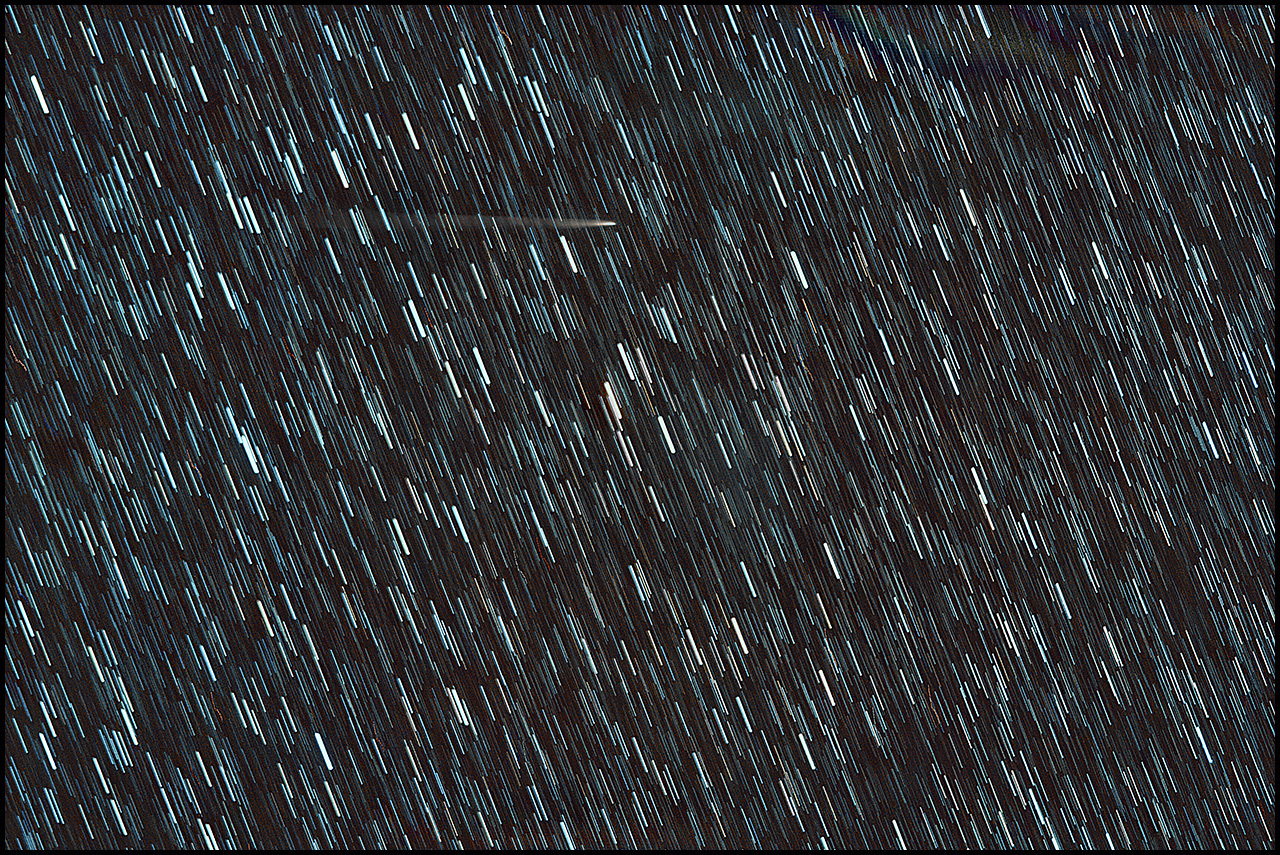
2025/12/18. Comet 2025 K1/Atlas broke up in October as it passed perihelion. It passed Earth in November outbound, and a couple of nights ago, the receding fragments sported about a half-degree tail. The remains were down in the 13's. Was that crumbling junk pile within reach of an almost 6-inch F2.8 refractor and a regular camera? Of course it was. As the comet's remains passed from Cassiopiea into Andromeda, they made a nice target to try out some different alignment strategies.
First, here are five exposures (I took about 270) stacked with no special handling:
Next, I aligned the starfield and then used PixInsight's CometAlignment process to re-register the 217 star-aligned exposures on the comet:
Finally, I stacked the comet-registered images in groups of three 20 images apart (e.g., frames 011, 012, 013 and 031, 032, 033 etc). The comet moved very little in each 90 second group and the intervals between the groups meant that when the umages were stacked, stars could be removed by treating them as short-lived highlights (like satellites or airplanes or hot pixels). Then I gathered another set of three-some images also 20 images apart (014, 015, 106...), until I had stacked the entire sequence in 7 or 8 output images. Those I averaged with aggressive bright-pizel removal options which left only the comet in the frame. I copied the frame with only the comet back into the stack of all star-aligned frames (not really any simpler than it sounds):
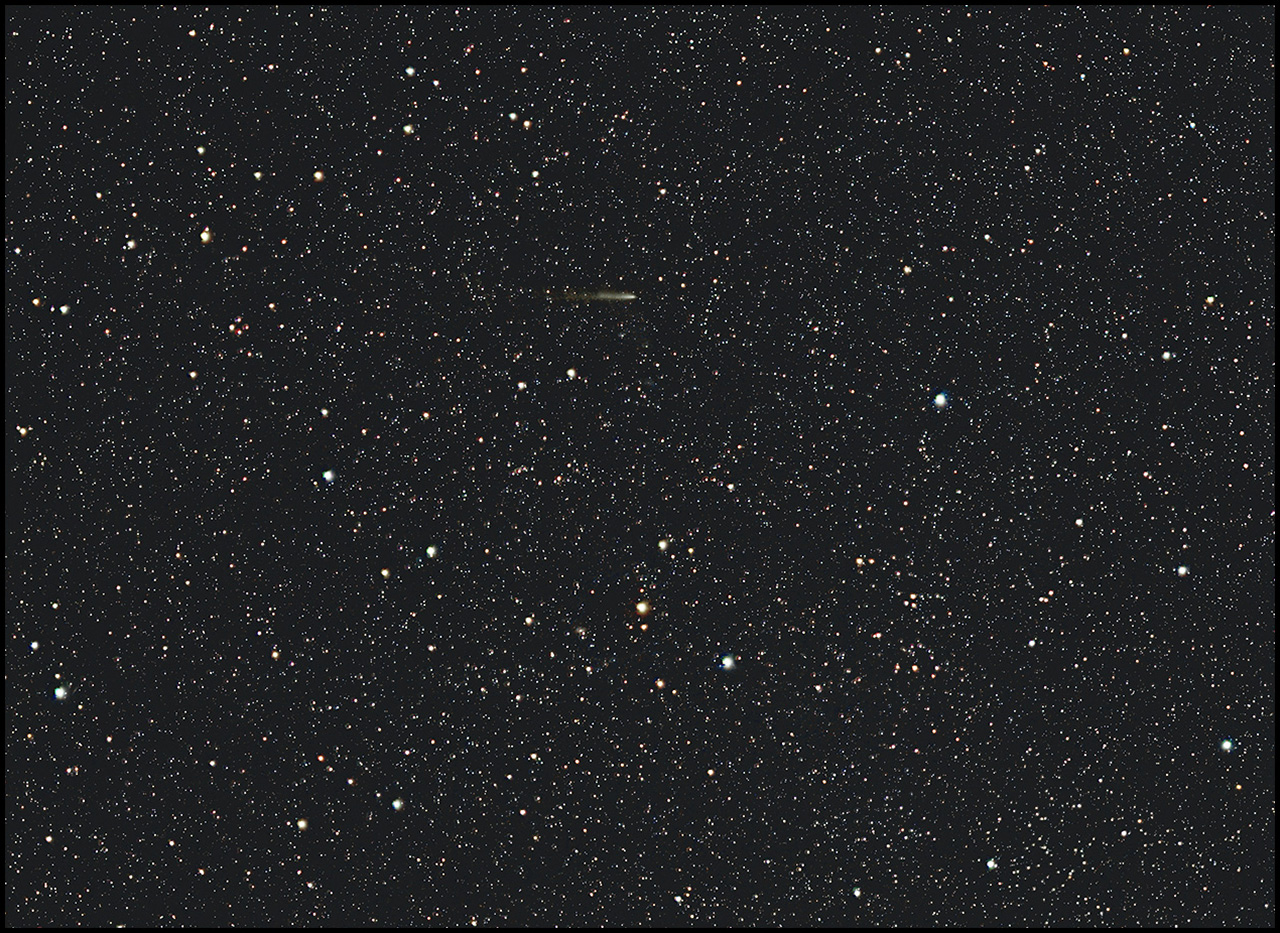
Honestly, after all that, is that image really any better than the simplest version up above? Is it even as good? I saved the raw CR3 files and both sets of aligned images in case a better idea occurs to me.
2025/12/18. Polar alignment seems to be a weak spot. It's plenty good enough for guided photography, but the initial star alignment slew is an adventure. I think everything would be easier with better polar alignment. (I confess that I haven't looked at the software solutions built into the mount.) I've been polar aligning by swapping a finder scope for the imaging OTA with the mount in home position which is (a) dubious and (b) a pain to check after the OTA is in place. When I cruised AstroMart this morning, I saw Min Xia of Dallas offering an iOptron iPolar electronic alignment tool for under half price. Done. I'm thinking I'll make a bracket to co-mount it with the guide-scope on the Wave 100i. I'm also thinking that levelling the kit may matter more than I thought it would (but I am far from convinced).
2025/12/19. I wasted 20 minutes looking for one of the brightest guideposts in the sky. I'm doing something wrong with one-star alignment -- the polar alignment wasn't all that bad (I tweaked it in the viewfinder with the 400mm in home position), and Deneb came up about where it ought to have, where I synced the mount. Slewing from Deneb to M31 was a mess. Anyway, I found M31 (using a laser pointer and a couple of JB Welded aluminum tubes), and from there I star-hopped over to M33. DSO-hopping really shouldn't be part ol my workflow a quarter of the way into the 21st Century.
2025/12/20. Levelling the mount using its provided bubble may have helped (or maybe I just got lucky). In any event, after a decent polar alignment and the usual one star alignment on Deneb, a slew put M31 (barely) on the 35mm chip. Another slew did the same for M33. I gathered two more hours of exposure. Here's the current pile:
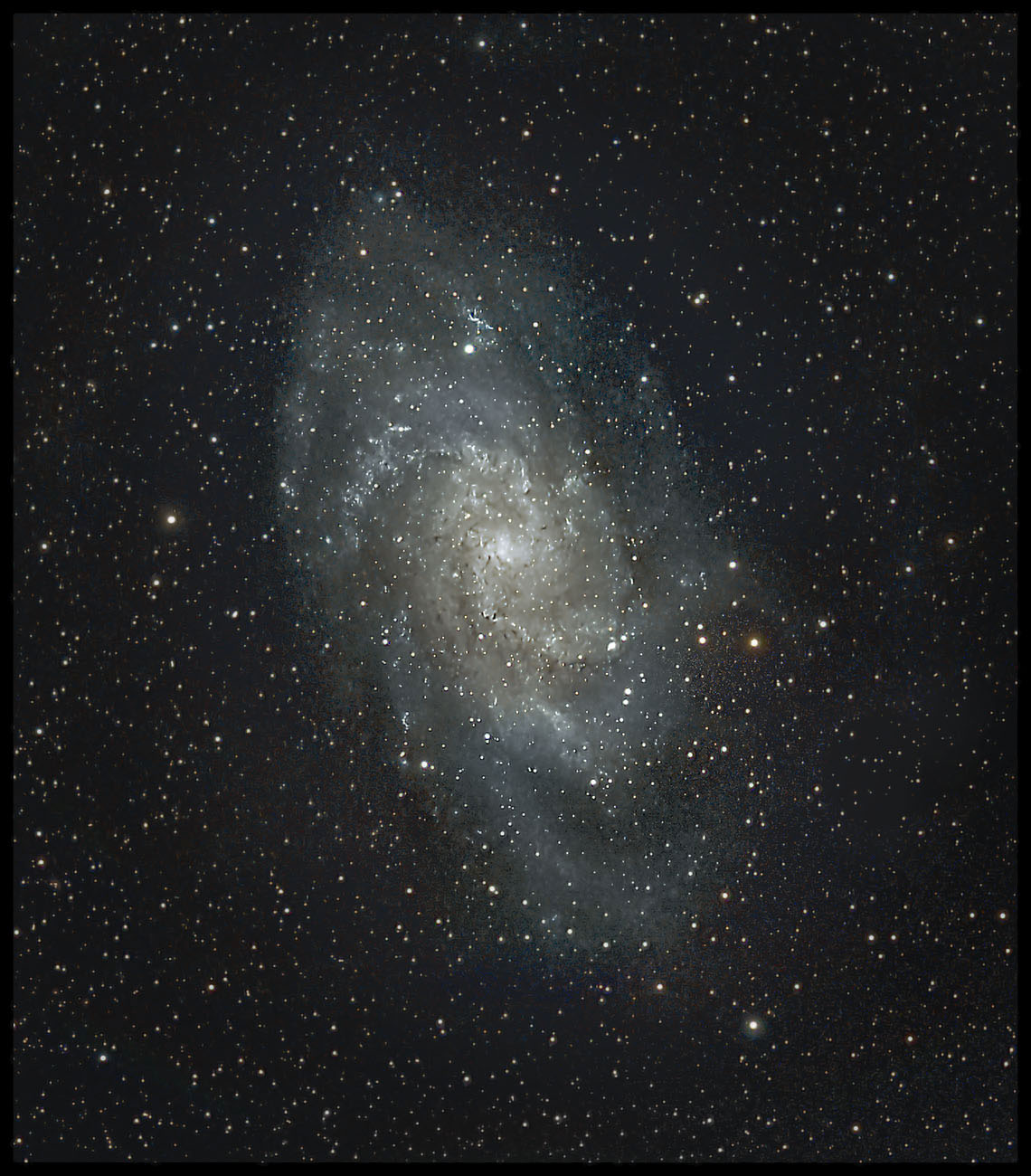
840x30s, 400mm F2.8, R6, ISO1600.
That's 7 hours at F2.8, which is equivalent to 28 hours behind the F5.5 TMB92.
I debayered and calibrated all 840(+/-) files from three nights en masse. Then I divided the data from each night into sets of about 60 files and aligned and integrated each set into 14 finished files. I aligned and integrated these metaframes for the developed image. That ought to make it easy to add more exposure: do it in 30 minute increments. There's no need to reprocess seven hours of data to welcome additions.
Note that I sometimes got "RANSAC: failed to find valid pairs..." messages while PixInsight ran StarAlignment. The following adjustments eliminated the error: under the star detection tab, increase minimum structure size to 3, 4, or 5; set noise reduction to 2 or 3; max distortion to 0.80; increase sensitivity; and set compute PSF fits to Never. Some of that was surely gratuitous, but hey.
:: top :: |